Posts Tagged ‘Tibetan Buddhism’
Tags: Tibetan Buddhism
Dolpopa’s Elusive Kalachakra Annotations
This post is titled, Dolpopa’s Elusive Annotations to the Kālachakra Commentary. By Cyrus Stearns, a contributing author to the Jonangpa blog. Dolpopa’s fabled annotations to the Stainless Light commentary on…
Read MoreNotes on Jonang Series II
The second set in the Jonang Publication Series (Jo nang dpe tshogs) was recently published (vols. 11-21) in Beijing.[1] This annual series is dedicated to making select works on sūtra…
Read MoreThe Quintessence of Zhentong
Thinking about this well structured collection of 108 instructions, I thought to pick a few and post them. Feeling predictable, I wanted to start with what you may expect to…
Read More108 Quintessential Instructions
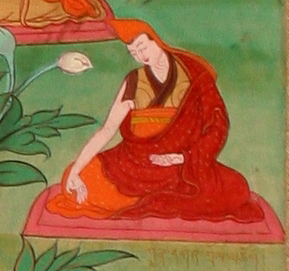
As I’ve recently been reading through the collection of 108 Quintessential Instructions that was arranged by the Jonang master Kunga Drolchok (1507-1566), I’ve been thinking through the seemingly simple question,…
Read MoreTibetan Zhentong Discourse II
Kongtrul also lists Rangjung Dorje’s and Dolpopa’s contemporary, the celebrated Nyingma master Kunkhyen Drimé Odzer or Longchen Rabjam (1308-1363). Longchenpa does use similar terminology but in a context and with…
Read MoreTibetan Zhentong Discourse I
The wide variety of intricacies and nuances within the body of Tibetan thought that is termed “zhentong” is simply fantastic. The use of the word is so varied in fact…
Read MoreElucidating the Jeweled Matrix
Let’s talk texts. As much as contemplative practice, ritual, or even personal oral instructions are essential to esoteric transmission, it is texts and the transference of texts through time that…
Read MoreTārāyogīni Tantra & Practice

This post is titled, The Transmission of the Tantra and Practices of Tārāyogīni (Sgrol ma rnal ‘byor ma): A Little-Known Jonang Specialty. By Thomas Roth, a contributing author to the…
Read MoreZhentong isn’t Cittamātra
For some reason, those unfamiliar with the zhentong presentation tend to associate it with the Cittamāra (“Mind Only” or “Mentalist”) system, as if Madhyamaka was only divided into Svātantrika and…
Read MoreŚākyamuni’s 3 Revolutions

With the sustaining of a tradition, there is the multi-generational task of repeatedly defining and describing what is understood to be most real (or unreal). Then, every once in a…
Read More