Posts Tagged ‘Buddhism’
Tags: Buddhism
Are there Geluk Zhentongpas?
Are there Geluk zhentongpas? This is a question that I’ve been asking for some time. Fortunately, a set of rare texts that were recently recovered from Tibet may shed some…
Read MoreThe 21 Tārās of Sūrya-Gupta

The following post is titled, “A Description of the Various Aspects of Tārā as Contained in Jonang Tāranātha’s Ocean of Yidam Deities, the 100 Deities of Narthang and the Vajrāvalī…
Read MoreTāranātha’s Descriptions of Tārā

The following post is titled, “A Description of the Various Aspects of Tārā as Contained in Jonang Tāranātha’s Ocean of Yidam Deities, the 100 Deities of Narthang and the Vajrāvalī…
Read More108 Quintessential Instructions
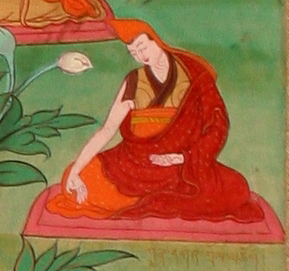
As I’ve recently been reading through the collection of 108 Quintessential Instructions that was arranged by the Jonang master Kunga Drolchok (1507-1566), I’ve been thinking through the seemingly simple question,…
Read MoreTibetan Zhentong Discourse II
Kongtrul also lists Rangjung Dorje’s and Dolpopa’s contemporary, the celebrated Nyingma master Kunkhyen Drimé Odzer or Longchen Rabjam (1308-1363). Longchenpa does use similar terminology but in a context and with…
Read MoreTibetan Zhentong Discourse I
The wide variety of intricacies and nuances within the body of Tibetan thought that is termed “zhentong” is simply fantastic. The use of the word is so varied in fact…
Read MoreTārāyogīni Tantra & Practice

This post is titled, The Transmission of the Tantra and Practices of Tārāyogīni (Sgrol ma rnal ‘byor ma): A Little-Known Jonang Specialty. By Thomas Roth, a contributing author to the…
Read MoreZhentong isn’t Cittamātra
For some reason, those unfamiliar with the zhentong presentation tend to associate it with the Cittamāra (“Mind Only” or “Mentalist”) system, as if Madhyamaka was only divided into Svātantrika and…
Read MoreŚākyamuni’s 3 Revolutions

With the sustaining of a tradition, there is the multi-generational task of repeatedly defining and describing what is understood to be most real (or unreal). Then, every once in a…
Read MoreWhose Svabhāva is It?

One of the major tripping points in Mahāyāna Buddhist philosophy is identifying what is intrinsically existent ― what is referred to in Sanskrit as “svabhāva” (rang bzhin), and what is…
Read More